
Satellite Study Finds Lagos Land Sinking by About 5mm a Year
New satellite research has identified Lagos as one of Africa’s major land-subsidence hotspots, with the ground sinking at a median rate of about five millimetres a year.
The peer-reviewed study, published in Science Advances on 27 November 2026, examined vertical land movement in 20 African coastal cities. Researchers used repeated radar observations from the European Space Agency’s Sentinel-1 satellites to measure small changes in ground elevation.
Why sinking land matters
Sea-level rise is only one part of coastal flood risk. If the ground itself is also sinking, the relative height of the sea increases more quickly. The researchers found that subsidence varied sharply across Lagos: central districts were comparatively stable, while rapidly developing eastern and western areas were sinking faster.
The paper discusses several possible local drivers, including groundwater withdrawal, the compression of loose sediments under heavy construction and the continuing settlement of reclaimed land. The authors caution that limited ground measurements make it difficult to assign a precise cause to every observed hotspot.
Exposure is not the same as a prediction of certain flooding
The study estimated that about 2.6 million Lagos residents lived in areas potentially exposed to extreme coastal water levels in 2020. Under the study’s assumptions, that exposure could rise to more than four million people by 2100.
Those figures are risk estimates, not a forecast that every mapped area will definitely flood. The modelling did not fully account for existing or future coastal defences and held population and building stock at 2020 levels to isolate the effects of sea-level change and land movement.
The findings strengthen the case for better groundwater management, stricter planning on reclaimed and low-lying land, continuous subsidence monitoring and protection or relocation of critical infrastructure. They do not support sensational claims that Lagos will suddenly disappear.
Sources
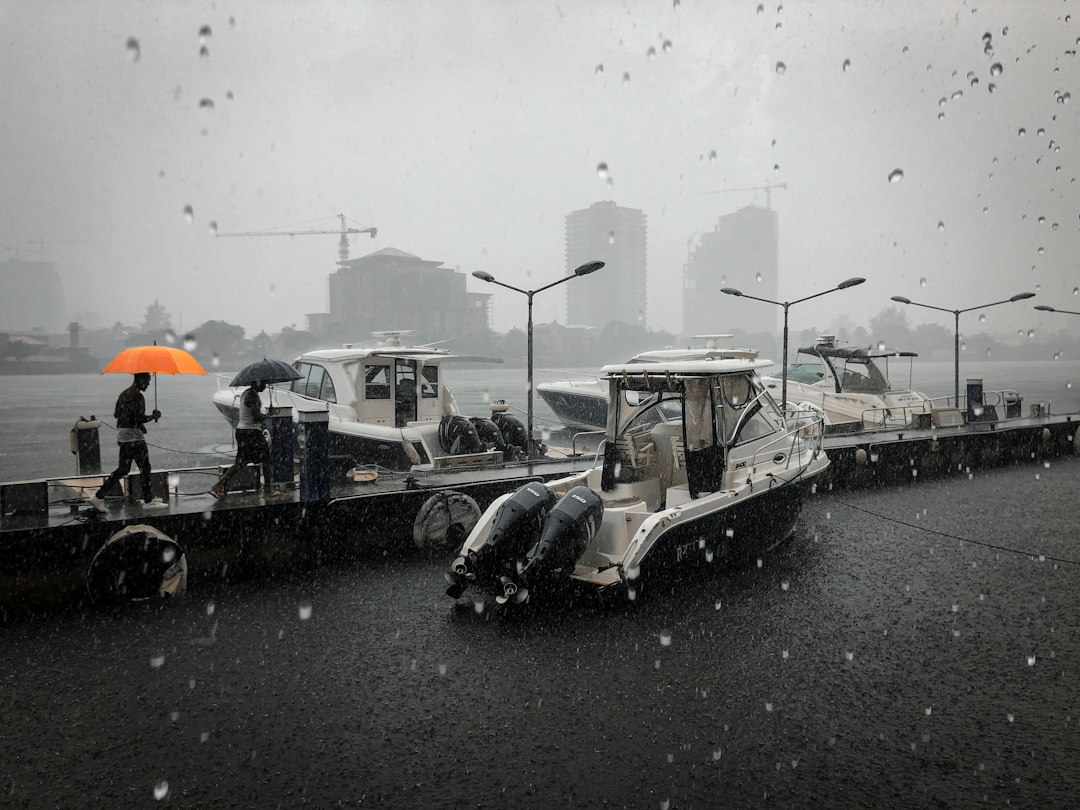
Representative Lagos waterfront image. Photo by Francis Odeyemi/Unsplash; not a documented flood event.
