
CBN and NNPC Sign Framework to Coordinate Oil Revenue, FX Flows and Energy Financing
The Central Bank of Nigeria and NNPC Limited have signed a memorandum of understanding intended to create a more structured working relationship between the country’s monetary authority and its national energy company.
The agreement was signed at the CBN headquarters in Abuja on Wednesday, 18 November 2026. According to NNPC Limited’s official statement, its main areas include foreign-exchange inflows, energy-project financing, account management, contractor settlements and financial discipline.
What the framework covers
NNPC Group Chief Executive Officer Bashir Bayo Ojulari said the arrangement is designed to replace irregular, issue-by-issue engagement with a defined structure. The company said working groups, implementation timelines and accountability mechanisms would be established.
NNPC also said the framework would support efforts to channel oil and gas export proceeds into Nigeria, improve coordination on foreign-exchange conversion and help the company raise capital against its assets and balance sheet. It linked the agreement to its stated ambition of increasing production from about 1.8 million barrels per day to three million barrels per day.
CBN Governor Olayemi Cardoso described the memorandum as the formalisation of an existing relationship. He said more predictable revenue and foreign-exchange inflows could support fiscal operations and macroeconomic stability.
Reuters independently reported that the agreement also covers financing for energy assets and stronger financial and payment systems.
Implementation will determine the effect
The signing does not by itself guarantee higher production, stronger reserves or a more stable naira. Those outcomes will depend on implementation, transparent reporting, oil output, export receipts and compliance by the institutions involved.
MBTV will monitor the promised working groups and any measurable changes in remittances, foreign-exchange inflows and energy financing.
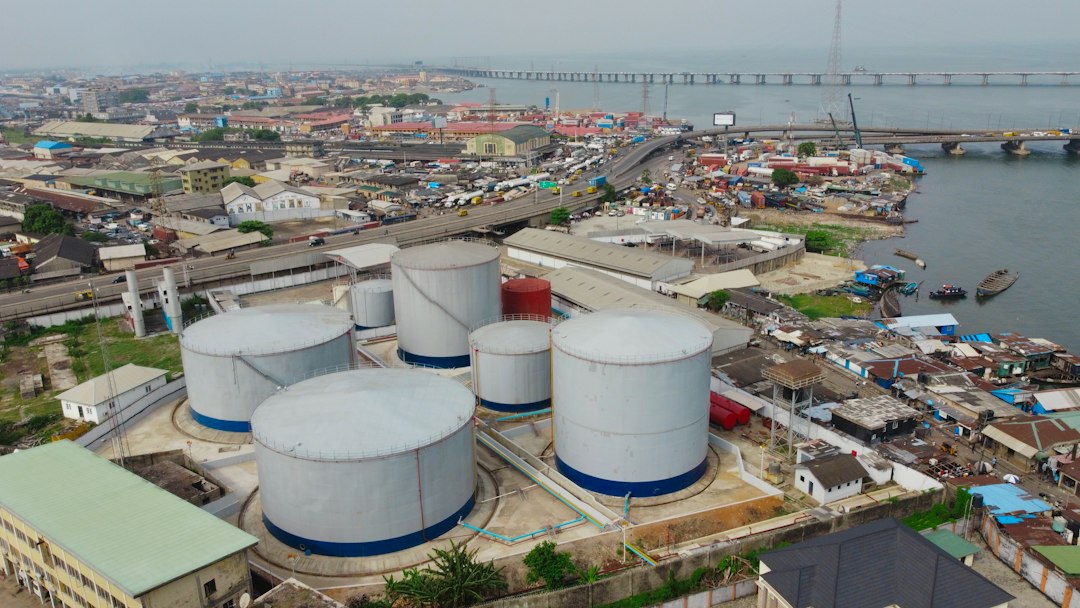
Featured image: Illustrative view of Lagos industrial infrastructure. Photo by Vitalis Nwenyi via Unsplash; it does not depict the signing ceremony.


